
Article Plan: Secondary 3 Mathematical Problem-Solving (Situation-Problème)
Secondary 3 mathematics focuses on situation-problème, offering downloadable PDF resources for algebra, geometry, and arithmetic practice; enhancing skills through 28 word problems.
Secondary 3 mathematics in Quebec introduces students to a unique problem-solving approach centered around situation-problème – real-world scenarios demanding mathematical application. This differs from traditional textbook exercises, emphasizing comprehension and strategic thinking.
A key component of mastering these challenges involves utilizing readily available resources, particularly downloadable PDF documents. These PDFs often contain a collection of 28 diverse word problems, designed to test students’ abilities in basic arithmetic, algebraic reasoning, and geometric principles.
These resources aren’t merely practice exercises; they represent a shift towards applying mathematical knowledge to practical contexts. Students learn to dissect complex situations, identify relevant information, and formulate effective solutions. Access to these PDFs, alongside classroom practice (like the C1 version), is crucial for exam preparation, especially for the April 2018 revision materials.
Understanding “Situation-Problème” in Math
“Situation-problème”, central to Secondary 3 math, presents mathematical concepts embedded within realistic contexts. Unlike direct calculations, these problems require students to interpret scenarios and determine the appropriate mathematical operations. PDF resources are vital for practice, offering 28 examples of these word problems.
The core idea is to move beyond rote memorization and foster genuine understanding. Students must analyze the given information, identify the unknown, and devise a solution strategy. These PDFs often include corrected revisions (like the April 2018 version) and practice exercises (C1 version) with solutions, aiding comprehension.
Successfully tackling situation-problème necessitates a structured approach – a 7-step strategy – focusing on understanding before calculating. These downloadable PDFs provide the necessary tools for mastering this crucial skill.
The Importance of Problem-Solving Skills
Problem-solving skills are paramount in Secondary 3 mathematics, particularly when addressing situation-problème. These skills extend far beyond the classroom, fostering critical thinking and analytical abilities applicable to real-world challenges. Mastering these concepts, aided by downloadable PDF resources, prepares students for future academic pursuits.
The 7-step strategy emphasized in these materials isn’t merely about finding the correct answer; it’s about developing a methodical approach. PDFs containing practice exercises (C1 version, Diane’s April version) and their solutions allow students to refine this process.
Successfully navigating situation-problème builds confidence and reinforces mathematical understanding. Access to corrected revisions (April 2018) further solidifies learning, making these PDF resources invaluable.
Key Mathematical Concepts Covered in Secondary 3
Secondary 3 mathematics, centered around situation-problème, revisits and expands upon fundamental concepts. Core areas include algebraic foundations, geometric principles, and practical applications of arithmetic operations. Downloadable PDF resources provide focused practice in each domain.
These PDFs often present problems involving basic calculations – addition, subtraction, multiplication, and division – within realistic contexts. The emphasis on word problems necessitates strong comprehension skills alongside mathematical proficiency.

Resources like the April 2018 revision materials and C1 practice exercises (with solutions) reinforce these concepts. Students can access these materials in PDF and Word formats, facilitating both digital and traditional learning styles.
Algebraic Foundations
Secondary 3’s algebraic focus, within the situation-problème framework, builds upon earlier concepts. PDF resources emphasize translating word problems into algebraic equations, a crucial skill for problem-solving. These materials cover essential topics like variables, expressions, and simple equations.
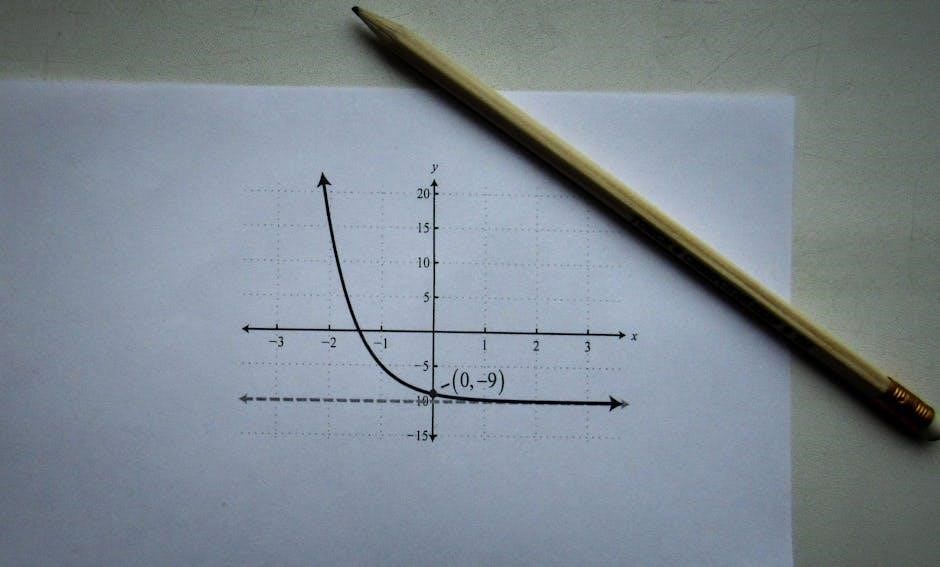
Students learn to identify unknowns and represent them symbolically, then manipulate equations to solve for those unknowns. The April 2018 revision materials and C1 practice PDFs provide ample opportunity to hone these skills.
Understanding algebraic thinking is vital for tackling complex situation-problèmes, moving beyond rote calculations to conceptual understanding. These downloadable resources support this transition.
Geometric Principles
Secondary 3 geometry, integrated within situation-problèmes, utilizes downloadable PDF resources to reinforce spatial reasoning and problem-solving. These materials cover fundamental concepts like area, perimeter, volume, and angle relationships.
Students apply these principles to real-world scenarios presented as word problems, requiring them to visualize and analyze geometric shapes. The provided PDFs, including those from the April 2018 revision and C1 practice, offer targeted exercises.
Mastering geometric principles is essential for successfully navigating situation-problèmes involving spatial dimensions and calculations. These resources aim to build a strong foundation in this area.

Arithmetic Operations & Applications
Secondary 3 arithmetic, a cornerstone of situation-problèmes, is strengthened through downloadable PDF resources focusing on addition, subtraction, multiplication, and division. These operations are applied within practical, real-world contexts presented as word problems.
The available PDFs, including revision materials from April 2018 and C1 practice exercises, provide ample opportunities for students to hone their computational skills. Emphasis is placed on understanding how to select the correct operation to solve each problem.
These resources ensure students can confidently tackle arithmetic-based situation-problèmes, building a solid foundation for more advanced mathematical concepts.
A 7-Step Problem-Solving Strategy
Mastering situation-problèmes in Secondary 3 relies on a structured approach. A key element found within downloadable PDF resources is a comprehensive 7-step strategy. The initial four steps – understanding and planning – are crucial for preparation before calculations begin.
This strategy, applicable to all mathematical challenges, guides students through problem comprehension, solution planning, execution, and review. PDF documents offer detailed explanations and examples, reinforcing each step.
By consistently applying this method, students develop a systematic approach to problem-solving, improving accuracy and confidence when tackling complex situation-problèmes.
Step 1: Understanding the Problem
The first, vital step in solving situation-problèmes, detailed in Secondary 3 PDF resources, is thorough problem understanding. This involves carefully reading the problem statement, identifying key information, and clarifying any ambiguous terms.
Students must determine what is known, what is unknown, and what the question is specifically asking. PDF guides emphasize re-reading the problem multiple times, potentially rephrasing it in simpler terms.
Visualizing the problem, drawing diagrams, or creating tables can aid comprehension. This foundational step, before any calculations, ensures a focused and accurate approach to finding the solution.
Step 2: Planning a Solution
Following problem understanding, the second step, highlighted in Secondary 3 situation-problème PDF resources, is devising a strategic plan. This involves selecting appropriate mathematical concepts and operations to address the problem.
Consider which formulas, theorems, or techniques are relevant. Break down complex problems into smaller, manageable steps. Determine the order in which calculations should be performed.
PDF guides suggest outlining the solution process, perhaps using bullet points or a flowchart. Anticipate potential challenges and consider alternative approaches. A well-defined plan minimizes errors and promotes efficient problem-solving;
Step 3: Executing the Plan
With a solid plan established, the third step, crucial in Secondary 3 situation-problème practice (as detailed in available PDF resources), is meticulous execution. This means carefully performing the calculations and operations outlined in your plan.
Show all your work clearly and systematically. Pay close attention to units and ensure consistency throughout the process. Double-check each step to minimize arithmetic errors.
Utilize the appropriate mathematical tools and techniques. PDF guides emphasize accuracy and precision. If you encounter difficulties during execution, revisit your plan and make necessary adjustments.
Step 4: Reviewing the Solution
The final, yet vital, step in solving situation-problème in Secondary 3, supported by numerous PDF practice materials, is reviewing your solution. Does the answer logically address the original problem? Is it reasonable within the context of the scenario?

Check your calculations again, focusing on potential errors. Verify that your units are correct and consistent. Reread the original problem statement to ensure you answered the question asked.
PDF resources often include corrected solutions for comparison. Utilize these to identify any mistakes in your approach. This review process solidifies understanding and builds confidence.
Types of Problems Encountered in Secondary 3
Secondary 3 situation-problème, often found in downloadable PDF practice sets, presents a variety of challenges. These commonly include word problems requiring careful interpretation and translation into mathematical expressions.
Basic arithmetic problems, involving addition, subtraction, multiplication, and division, form a foundation. However, problems increasingly demand algebraic thinking – using variables and equations to represent unknowns.
Students will encounter scenarios requiring them to apply mathematical concepts to real-world contexts, like cost analysis (e.g., juice storage options). PDF resources provide diverse examples, building problem-solving skills.
Word Problems & Their Structure
Situation-problème in Secondary 3 frequently manifests as word problems, demanding a structured approach. These problems, often available as PDF worksheets, present mathematical concepts embedded within narrative contexts.
Understanding the structure is key: identify the knowns, the unknowns, and the relationships between them. Careful reading and highlighting crucial information are essential first steps.
PDF resources often include 28 such problems, designed to build proficiency in translating words into equations. Mastering this skill is vital for success, as it forms the core of many Secondary 3 mathematical assessments.
Problems Involving Basic Arithmetic
Secondary 3 situation-problème often begins with reinforcing fundamental arithmetic skills. PDF practice materials frequently include word problems centered around addition, subtraction, multiplication, and division.
These aren’t isolated calculations; they’re presented within real-world scenarios, requiring students to determine the correct operation. For example, calculating total costs, determining remaining quantities, or dividing resources.
Many downloadable PDF resources offer 28 diverse problems, building from simple applications to more complex multi-step scenarios. Mastering these basics is crucial, forming the foundation for tackling more advanced algebraic concepts later in the curriculum.
Problems Requiring Algebraic Thinking
Secondary 3 situation-problème progressively introduces algebraic thinking, moving beyond numerical calculations. PDF resources present problems where unknowns must be represented by variables, setting the stage for equation formation.
Students learn to translate word problems into algebraic expressions and equations, then solve for the unknown. These problems often involve patterns, relationships, and proportional reasoning.
Downloadable PDFs provide practice with linear equations, inequalities, and basic functions. The 28 problem examples often require students to define variables, write equations, and interpret solutions within the context of the original problem. This builds a crucial bridge to more advanced mathematical concepts.
Resources for Secondary 3 Math Practice (PDF Focus)
Numerous downloadable PDF resources are available to support Secondary 3 math practice, specifically targeting situation-problème. These materials offer comprehensive coverage of key concepts, including algebra, geometry, and arithmetic operations.
Students can access 28 practice problems formatted as word problems, ideal for honing problem-solving skills. Many resources are available in both PDF and Word formats (with membership), allowing for digital completion and printing.
Free PDF downloads provide immediate access to exercises and solutions. Revision materials, including corrected versions from April 2018, and practice exercises (C1 version) are readily available, aiding exam preparation and reinforcing understanding.
Free PDF Downloadable Resources
Access a wealth of free PDF resources designed to bolster Secondary 3 math skills, with a strong emphasis on situation-problème. These materials provide immediate support for students tackling challenging word problems and reinforcing core mathematical concepts.
Downloadable documents include practice exercises, revision materials from April 2018 (and their corrected versions), and the C1 practice set, complete with solutions. These resources cover fundamental arithmetic operations – addition, subtraction, multiplication, and division – within real-world contexts.
Perfect for both students and teachers, these PDFs offer convenient, accessible practice, enhancing problem-solving abilities and exam readiness. Explore these materials to master Secondary 3 mathematics!
PDF Resources Covering Algebra
Strengthen algebraic foundations with dedicated PDF resources tailored for Secondary 3 students navigating situation-problème. These materials focus on building essential skills for solving equations and applying algebraic thinking to practical scenarios.
While specific algebra-focused PDFs are mentioned as being available through membership, the broader collection of downloadable resources – including revision materials and practice exercises – inherently incorporate algebraic concepts within word problems. Expect to encounter problems requiring variable manipulation and equation formulation.
These resources are designed to complement classroom learning, providing ample opportunity for independent practice and reinforcing understanding of key algebraic principles. Access these PDFs to excel in Secondary 3 mathematics!
PDF Resources Covering Geometry
Enhance your geometric understanding with Secondary 3 PDF resources designed to tackle situation-problème challenges. These materials provide focused practice on key geometric principles, aiding in the visualization and solution of spatial reasoning problems.
Similar to algebra, dedicated geometry PDFs are accessible through membership, but the comprehensive collection of downloadable resources – including revision materials and practice exercises – integrates geometric concepts within real-world applications. Expect problems involving shapes, areas, and volumes;
Utilize these PDFs to solidify your grasp of geometric theorems and techniques, preparing you to confidently solve complex problems encountered in Secondary 3 mathematics. Mastering geometry is crucial for success!
Analyzing Cost Problems (Example: Juice Storage)
Situation-problème often involve real-world applications like cost analysis. Consider a scenario where a juice producer must determine the most economical storage option – aluminum versus other containers.
PDF resources provide examples illustrating how to analyze variable costs associated with each container type. Aluminum, while potentially more expensive upfront, may have higher storage costs due to its increased volume.
These problems require students to compare costs, apply mathematical models, and interpret graphical representations of expenses. Understanding these concepts is vital for making informed decisions. The provided example demonstrates how to evaluate different options and select the most cost-effective solution.
Understanding Variable Costs
In situation-problème, variable costs are crucial for accurate analysis. These expenses fluctuate based on the quantity of items or services used – unlike fixed costs which remain constant.
For example, juice storage costs depend on the container type and volume. Aluminum containers, as highlighted in PDF resources, incur higher costs due to their larger size, impacting storage fees.

Students must identify and calculate these varying expenses to determine the overall cost-effectiveness of different options; Understanding how volume affects storage costs is key. Mastering this concept allows for informed decision-making in real-world scenarios presented within the downloadable PDF practice materials.
Comparing Costs of Different Options
Situation-problème often requires comparing costs to find the most economical solution. Utilizing the juice storage example from downloadable PDF resources, students analyze expenses associated with various container types.
The PDF materials illustrate that aluminum containers, despite potentially holding more juice, have higher storage costs due to their increased volume. A thorough comparison involves calculating the total cost – storage fees plus container costs – for each option.
Students apply mathematical models to determine which container yields the lowest overall expense. This skill is vital for solving real-world problems presented in Secondary 3 math, reinforcing practical application of learned concepts.
Applying Mathematical Models to Real-World Scenarios

Secondary 3 situation-problème emphasizes applying mathematical concepts to practical situations, readily available through downloadable PDF resources. The juice storage example demonstrates this perfectly.
Students utilize cost analysis – a mathematical model – to determine the most efficient storage solution. PDFs provide scenarios requiring students to formulate equations representing variable costs and compare different options.
This process isn’t merely about calculations; it’s about translating real-world challenges into mathematical language. Mastering this skill, through practice exercises in the provided PDFs, prepares students for complex problem-solving and critical thinking, essential for future success.
Exam Preparation & Revision Materials (April 2018 Example)
Effective exam preparation for Secondary 3 situation-problème relies on utilizing available revision materials, including corrected versions from April 2018, accessible as PDFs.
These resources offer a focused review of key concepts and problem-solving techniques. Practice exercises, specifically the “C1 version” and “Diane’s April version,” along with their corresponding solutions (also in PDF format), are crucial for reinforcing understanding.
Students should thoroughly review past exam papers to familiarize themselves with question formats and difficulty levels. Consistent practice with these downloadable PDFs builds confidence and ensures readiness for the exam, maximizing performance.

Reviewing Past Exam Papers
Analyzing previous Secondary 3 situation-problème exam papers, available as PDFs, is vital for effective preparation. This process allows students to identify recurring themes, common question types, and the level of difficulty expected.
Focus on understanding the problem-solving strategies demonstrated in the solutions, rather than simply memorizing answers. Pay close attention to how concepts are applied in different contexts.
Utilize these PDFs to simulate exam conditions, timing yourself and working through the papers without assistance. Identifying areas of weakness through this practice enables targeted revision and focused study, ultimately boosting exam confidence and performance.

Utilizing Corrected Revision Materials
Corrected revision materials, often available as downloadable PDFs, are invaluable for Secondary 3 situation-problème preparation. These resources address common errors and misconceptions, providing clear explanations and accurate solutions.
Carefully review the corrections, understanding why a particular answer was incorrect and how to arrive at the correct solution. Don’t just memorize the corrected answer; focus on the underlying mathematical principles.
These PDFs offer a refined learning experience, building upon initial understanding and solidifying key concepts. Actively working through these materials will significantly improve problem-solving skills and boost confidence for the upcoming exam.
Practice Exercises (C1 Version) & Solutions
The C1 version practice exercises, often found as downloadable PDFs, provide targeted practice for Secondary 3 situation-problème challenges. These exercises are designed to reinforce concepts and build proficiency in applying problem-solving strategies.
Working through these problems is crucial, but equally important is reviewing the provided solutions. Compare your approach to the suggested method, identifying areas where you excelled and areas needing improvement.

Utilize the solutions as a learning tool, not just a means to check your answers. Understanding the reasoning behind each step will deepen your comprehension and prepare you for diverse problem types.