Coffee Grind Size Chart: A Comprehensive Guide (Updated 03/08/2026)
Navigating the world of coffee requires understanding grind size; readily available PDF resources offer visual comparisons, aiding in achieving optimal flavor extraction consistently.
Embarking on the journey to exceptional coffee begins with understanding the pivotal role of grind size. It’s far more than just a preference; it’s a fundamental element dictating the final flavor profile of your brew. Pre-ground coffee simply cannot compete with the freshness and control offered by grinding whole beans yourself, a testament to a refined palate. The texture directly impacts how efficiently water extracts flavors from the coffee grounds.
Fortunately, numerous resources, including readily available coffee grind size chart PDFs, visually demonstrate the spectrum of grinds – from extra coarse to Turkish fine. These charts are invaluable tools for beginners and seasoned coffee enthusiasts alike, providing a clear reference point. Mastering grind size empowers you to unlock the full potential of your beans, avoiding the pitfalls of bitter or sour brews. It’s a respectable pursuit, elevating your coffee experience significantly.
Why Grind Size Matters
The grind size profoundly influences the surface area exposed to water during brewing, directly impacting extraction. A consistent grind is crucial; inconsistent particles lead to uneven extraction, resulting in a muddled and unbalanced flavor. Too fine a grind over-extracts, yielding bitterness, while too coarse a grind under-extracts, producing a sour, weak cup.
Utilizing a coffee grind size chart PDF is a practical step towards consistency. These charts visually illustrate the correlation between grind size and brewing methods. They demonstrate how different methods require specific grind sizes to optimize flavor. Ignoring grind size is akin to ruining excellent beans. It’s a detail that separates a passable cup from a truly exceptional one, a point emphasized by even ex-baristas and professional “coffee snobs.”
The Impact of Grind Size on Flavor
Grind size dictates the rate at which water extracts flavors from coffee grounds, fundamentally shaping the final taste profile. Finer grinds, with their increased surface area, facilitate rapid extraction, potentially leading to a bitter, harsh flavor if overdone. Conversely, coarser grinds slow extraction, often resulting in a sour, underdeveloped taste.
A coffee grind size chart PDF becomes invaluable here, acting as a guide to balance extraction. It visually demonstrates how to adjust grind size to achieve desired flavors. Freshly ground beans, paired with the correct grind size, unlock a palette of nuanced flavors impossible to achieve with pre-ground coffee. Understanding this impact transforms coffee brewing from a simple task into a rewarding exploration of taste.
Understanding the Grind Size Spectrum
A comprehensive coffee grind size chart PDF illustrates the range, from extra coarse to Turkish, enabling brewers to select the ideal texture.
Extra Coarse Grind
Characterized by the largest particle size, an extra coarse grind resembles peppercorns and is primarily utilized for cold brew coffee preparation. A coffee grind size chart PDF will visually demonstrate this substantial texture. This grind minimizes extraction, preventing over-extraction during the extended steeping times inherent in cold brewing.
The larger particles allow for a cleaner, less bitter cup, as fewer coffee grounds come into contact with the water for prolonged periods. It’s also sometimes employed in cowboy coffee methods.
Using an extra coarse grind with other brewing methods, like drip or pour-over, will result in severely under-extracted, weak, and sour coffee. Referencing a detailed PDF chart ensures correct selection. The visual aid clarifies the difference between extra coarse and simply coarse grinds, preventing brewing errors and maximizing flavor potential.
Coarse Grind
A coarse grind, slightly finer than extra coarse, exhibits a texture akin to sea salt; A coffee grind size chart PDF will clearly illustrate this distinction. This grind is best suited for brewing methods with longer steep times, most notably the French press. The larger particle size prevents grounds from passing through the French press filter, resulting in a cleaner cup;
It allows for sufficient extraction without becoming overly bitter, offering a full-bodied flavor profile. Using a coarse grind in methods like drip coffee will lead to under-extraction and a weak, sour taste.
Consulting a PDF chart provides a valuable visual reference, helping to differentiate between coarse and medium-coarse grinds. Accurate grind size is crucial for optimal flavor, and a visual guide simplifies the process, ensuring a consistently delicious French press experience.
Medium-Coarse Grind
The medium-coarse grind resembles rough sand, falling between coarse and medium in texture; a coffee grind size chart PDF visually demonstrates this placement. It’s a versatile grind, often favored for methods like the Chemex pour-over, offering a balance between extraction time and flavor clarity. This grind size allows for proper water flow through the Chemex’s thick filter, preventing clogging while ensuring sufficient contact time for optimal extraction.
Compared to a coarse grind, medium-coarse offers more surface area, leading to a slightly faster extraction. However, it’s still not fine enough for drip coffee makers, which require a medium grind.
Referencing a PDF chart aids in precise identification, preventing under or over-extraction. Mastering this grind unlocks the Chemex’s potential for a clean, bright, and nuanced cup of coffee.
Medium Grind
The medium grind, resembling granulated sugar, is arguably the most common and versatile coffee grind size; a coffee grind size chart PDF clearly illustrates its texture. This grind excels in drip coffee makers, providing the ideal balance between surface area and extraction time for consistent results. It allows water to flow through the grounds at a moderate pace, extracting a full-bodied flavor without bitterness.
Unlike finer grinds that can clog the filter, or coarser grinds that lead to under-extraction, medium offers a sweet spot.
A PDF chart is invaluable for visual confirmation, ensuring you’re not too fine or too coarse. Achieving the perfect medium grind unlocks the full potential of your automatic drip machine, delivering a reliably delicious cup every time.
Medium-Fine Grind
A medium-fine grind, slightly finer than granulated sugar, bridges the gap between drip and espresso; a detailed coffee grind size chart PDF showcases this nuanced texture. Often favored for pour-over methods like the Hario V60 or Chemex, it provides increased surface area for efficient extraction. This allows for a richer, more complex flavor profile compared to a standard medium grind, but requires careful attention to brewing technique.
Using a PDF guide helps visually confirm the consistency, preventing over or under-extraction.
It’s crucial to avoid a grind that’s too fine, which can lead to a bitter taste and clogged filters. Mastering the medium-fine grind unlocks a world of aromatic and flavorful possibilities in your manual brewing adventures.
Fine Grind
The fine grind, resembling table salt in texture, is a pivotal step towards espresso preparation; a comprehensive coffee grind size chart PDF visually demonstrates this crucial consistency. This level of fineness maximizes surface area, enabling rapid extraction under pressure. However, it demands a precise grinder and careful tamping to avoid channeling and uneven extraction.
Without proper technique, a fine grind can result in a bitter, over-extracted shot or a slow, weak brew.
Referencing a PDF chart ensures accuracy, as even slight variations can significantly impact the final espresso quality. Mastering the fine grind is essential for crafting authentic espresso-based beverages at home.
Extra-Fine Grind
An extra-fine grind, finer than table salt and approaching a powdery consistency, is specifically tailored for Turkish coffee preparation; a detailed coffee grind size chart PDF illustrates this exceptionally fine texture. This extreme fineness allows for complete immersion and prolonged brewing within the cezve, creating a thick, sediment-rich beverage.
Achieving this grind requires a specialized burr grinder capable of incredibly precise adjustments.
Consistency is paramount, as clumps or inconsistencies will disrupt the brewing process. A PDF guide provides a visual benchmark, ensuring the correct particle size for optimal flavor and body in traditional Turkish coffee. It’s a delicate balance demanding patience and precision.
Turkish Grind
The Turkish grind is the finest level achievable, resembling flour-like powder; a comprehensive coffee grind size chart PDF visually demonstrates this incredibly delicate texture. This ultra-fine consistency is essential for traditional Turkish coffee preparation, allowing for complete suspension in water and the creation of a rich, full-bodied brew with a distinctive sediment.
Specialized grinders are necessary to reach this level of fineness, as standard grinders often lack the precision.
PDF resources highlight the importance of uniformity – any variation impacts the brew. Mastering this grind unlocks the unique flavors and cultural experience of Turkish coffee, demanding a dedicated approach to grinding and brewing.
Grind Size Chart by Brewing Method
A detailed coffee grind size chart PDF illustrates the precise grind needed for each brewing style, ensuring optimal extraction and a flavorful cup consistently.
French Press Grind Size

For the immersive French Press brewing method, a coarse grind is paramount. Many comprehensive coffee grind size chart PDFs highlight this crucial detail. Think of it like sea salt – large, consistent particles. A coarser grind minimizes sediment passing through the filter, resulting in a cleaner, fuller-bodied cup. Finer grinds will lead to over-extraction and a muddy, bitter brew.
These PDFs often visually demonstrate the difference, comparing French Press grind to others. The ideal range typically falls between 800-1200 microns. Achieving this consistency requires a burr grinder, as blade grinders produce an uneven grind. Utilizing a grind size chart PDF as a reference ensures you’re within the optimal range, maximizing flavor and minimizing unwanted bitterness. Remember, experimentation is key, but start with a coarse setting and adjust based on taste.
Pour Over Grind Size
Pour over methods, celebrated for clarity and nuance, demand a medium-coarse to medium grind. Coffee grind size chart PDFs are invaluable tools for visualizing this range. The goal is a consistent extraction without excessive fines that clog the filter and create bitterness. This grind resembles granulated sugar – visible, but not overly chunky.
These PDFs often illustrate the ideal micron range, typically between 600-800 microns. A burr grinder is essential for achieving this uniformity. Different pour over devices, like the Hario V60 and Chemex (detailed separately), may require slight adjustments within this range. Consulting a chart PDF helps pinpoint the sweet spot for your specific setup. Proper grind size ensures a balanced, flavorful cup, highlighting the coffee’s inherent characteristics.
Hario V60 Grind Size
The Hario V60, known for its conical shape and spiral ribs, thrives with a medium-fine grind. Coffee grind size chart PDFs visually demonstrate this, typically showing a texture slightly finer than table salt. This consistency facilitates optimal water flow and extraction, crucial for the V60’s nuanced brewing process.
Micron-wise, aim for around 550-700 microns. These PDFs often include comparative images, helping you match your grind to the visual standard. A consistent grind prevents channeling – where water bypasses the coffee grounds – leading to uneven extraction. Utilizing a quality burr grinder is paramount. Fine-tuning based on brew time and taste is encouraged; a chart PDF serves as a starting point for dialing in your perfect V60 cup.

Chemex Grind Size
The Chemex brewer, celebrated for its elegant design and clean cup, demands a coarser grind than the V60. Coffee grind size chart PDFs illustrate this, showcasing a texture resembling coarse sand – significantly larger than table salt. This is due to the Chemex’s thicker filters, which slow water flow, requiring a larger surface area for proper extraction.
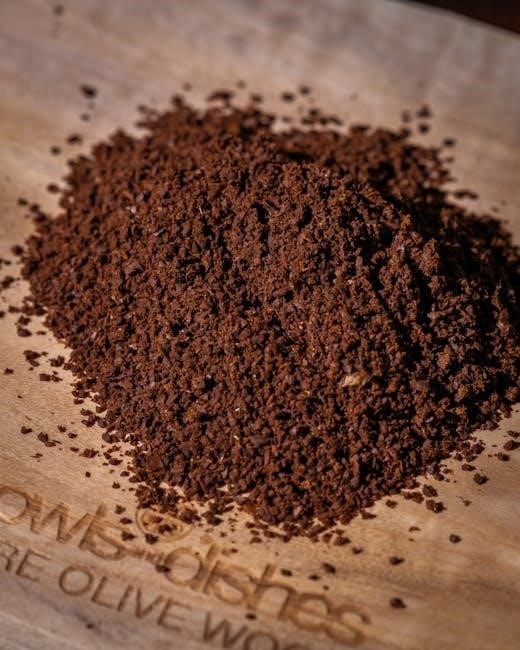
Generally, a grind size between 700-900 microns is recommended. These PDFs often provide comparative visuals, aiding in accurate assessment. A coarser grind prevents over-extraction and bitterness, common issues with finer grinds in the Chemex. Consistent particle size is vital; burr grinders are preferred. Referencing a chart PDF allows for informed adjustments based on brew time and personal preference, ultimately unlocking the Chemex’s full potential.
Drip Coffee Maker Grind Size
For standard drip coffee makers, a medium grind is generally recommended, falling between 550-650 microns. Coffee grind size chart PDFs visually demonstrate this as similar in texture to granulated sugar. This consistency allows for optimal extraction within the typical brew time of these machines.
However, variations exist between machines; some benefit from slightly coarser or finer adjustments. These PDFs often highlight this nuance. A grind that’s too fine can lead to over-extraction and a bitter taste, while too coarse results in under-extraction and a sour cup. Utilizing a chart PDF helps pinpoint the ideal setting for your specific drip coffee maker, ensuring a balanced and flavorful brew every time.
Aeropress Grind Size
The Aeropress is remarkably versatile, accommodating a wide range of grind sizes, but generally favors a medium-fine to fine grind (400-600 microns). Coffee grind size chart PDFs illustrate this as finer than drip, resembling table salt. This allows for sufficient extraction during the short brew time.
However, experimentation is key! PDFs often detail how grind size impacts body and flavor. A finer grind yields a fuller-bodied, more intense cup, while a coarser grind produces a cleaner, brighter brew. The specific grind depends on your preferred method – standard or inverted – and desired strength. Consulting a chart PDF provides a visual guide to navigate these options and unlock the Aeropress’s full potential.
Standard Aeropress Grind Size
For the standard Aeropress method, a medium-fine grind is typically recommended, falling within the 400-600 micron range. Coffee grind size chart PDFs visually demonstrate this consistency, often comparing it to fine sand. This texture facilitates efficient extraction within the Aeropress’s relatively short brewing window.
PDF resources emphasize that a slightly finer grind than you’d use for pour-over is ideal. This ensures adequate contact time between the water and coffee grounds. However, personal preference plays a role; experimenting with slightly coarser or finer grinds, guided by a chart PDF, can help you tailor the brew to your taste. Remember, a consistent grind is crucial for repeatable results.
Inverted Aeropress Grind Size
When utilizing the inverted Aeropress method, a slightly coarser grind than the standard approach is generally preferred, typically around 600-800 microns. Coffee grind size chart PDFs illustrate this difference, often showing it as resembling slightly coarser sand. This adjustment compensates for the extended brew time achieved by inverting the device, preventing over-extraction and bitterness.
PDF guides highlight that a coarser grind minimizes sediment passing through the filter. The inverted method allows for greater control over steeping, so referencing a chart PDF to fine-tune grind size based on desired strength is beneficial. Experimentation is key, but starting coarser and adjusting finer is a good practice for a balanced, flavorful cup.
Moka Pot Grind Size
For optimal Moka Pot brewing, a medium-fine grind is essential, falling roughly between 400-600 microns. Coffee grind size chart PDFs frequently depict this consistency as similar to fine table salt. This grind size strikes a balance – fine enough to create pressure for extraction, yet coarse enough to avoid clogging the filter basket.
PDF resources emphasize that a grind too fine will result in a bitter, over-extracted brew, while a grind too coarse leads to a weak, sour extraction. Visual comparisons within these charts are invaluable. Achieving the correct grind is crucial for the Moka Pot’s unique pressurized brewing process, delivering a strong, espresso-like coffee.

Espresso Grind Size
Espresso demands the finest grind – typically between 130-180 microns. Coffee grind size chart PDFs illustrate this as significantly finer than table salt, often resembling powdered sugar. This ultra-fine consistency is vital for creating the necessary resistance for proper espresso extraction under high pressure.
PDF guides highlight that achieving this precise grind is paramount; too coarse, and you’ll get a weak, under-extracted shot (sour taste). Too fine, and the machine will struggle, resulting in a bitter, burnt flavor. Detailed charts visually demonstrate the ideal espresso grind, aiding baristas in dialing in their shots for perfect crema and balanced flavor.
Turkish Coffee Grind Size
Turkish coffee requires the finest possible grind – even finer than espresso, approaching a flour-like consistency (around 60-80 microns). Coffee grind size chart PDFs clearly depict this as the most powdery texture achievable. This extreme fineness is crucial because the coffee is boiled directly with the grounds, allowing for maximum flavor and body.
PDF resources emphasize that achieving this level of fineness often necessitates a dedicated Turkish coffee grinder. Visual comparisons within these charts demonstrate the stark difference between Turkish grind and all other methods. Proper grind size ensures the coffee creates a rich, thick foam and a sediment-filled cup, integral to the traditional Turkish coffee experience.
Tools for Measuring Grind Size
PDF charts provide excellent visual references, while specialized gauges offer precise measurements; consistent assessment ensures optimal brewing, enhancing flavor and overall coffee quality.
Grind Size Comparison Charts (PDF Resources)
For those seeking a readily accessible and visual guide, numerous PDF resources detailing coffee grind size comparisons are available online. These charts are incredibly valuable tools, particularly for beginners navigating the nuances of coffee brewing. They typically showcase a spectrum of grind sizes, ranging from extra coarse to Turkish fine, alongside corresponding images for easy identification.

Many charts illustrate the grind size relative to common brewing methods, such as French Press, Pour Over, and Espresso, providing a quick reference point. Downloading and printing these PDFs allows for convenient access during the grinding process, ensuring consistency. Searching online for “coffee grind size chart PDF” will yield a wealth of options from coffee retailers, brewing equipment manufacturers, and coffee enthusiast websites.
These resources often include detailed descriptions of how each grind size impacts extraction and flavor, empowering users to make informed decisions. Utilizing these charts is a simple yet effective way to elevate your coffee brewing game and unlock the full potential of your beans.
Using a Grind Size Gauge
Beyond visual comparisons offered in PDF charts, a grind size gauge provides a more precise method for assessing your coffee grounds. These tools, often small and portable, feature a series of holes or slots of varying sizes. By attempting to pass your ground coffee through these openings, you can determine its relative coarseness or fineness.
A gauge doesn’t offer the comprehensive brewing method guidance found in a PDF, but it excels at consistency. It’s particularly useful for dialing in your grinder, allowing you to make minute adjustments and observe the resulting changes in grind size. Several manufacturers offer dedicated grind size gauges, though some multi-tools for coffee enthusiasts incorporate this feature.
Regularly using a gauge, alongside referencing PDF charts for ideal sizes, ensures repeatable results and helps you understand how your grinder performs. This combination of tools empowers you to consistently brew coffee tailored to your exact preferences, maximizing flavor and enjoyment.
Visual Inspection of Grind Size
While grind size gauges offer precision, a fundamental skill is learning to assess grind size visually. Comparing your grounds to images in a coffee grind size chart PDF is an excellent starting point. Observe the particle size – is it resembling coarse sand, table salt, or powdered sugar? This initial assessment provides a quick benchmark.
Experienced baristas develop an intuitive sense of grind size based on texture and appearance. Coarse grinds appear chunky and uneven, while fine grinds are powdery and consistent. Medium grinds fall somewhere in between. However, relying solely on visual inspection can be subjective.
Supplementing visual assessment with PDF references and, ideally, a gauge, provides a more reliable method. Remember that consistency is key; strive for uniformity in your grind to ensure even extraction and a balanced cup of coffee. Practice makes perfect, refining your visual skills over time.
Troubleshooting Grind Size Issues
Utilizing a coffee grind size chart PDF helps diagnose brewing problems; bitter tastes suggest too fine a grind, while sourness indicates a grind that’s too coarse.
Coffee Tastes Bitter (Grind Too Fine?)
If your coffee consistently tastes bitter, a grind that is too fine is a likely culprit. When coffee grounds are excessively small, they create a larger surface area exposed to water during brewing. This heightened exposure leads to over-extraction, pulling out undesirable compounds that contribute to bitterness. Referencing a coffee grind size chart PDF can visually demonstrate the difference between appropriate and overly fine grinds for your chosen brewing method.
To remedy this, adjust your grinder to a coarser setting. Even a slight adjustment can significantly impact the final flavor profile. Remember that different grinders require varying degrees of adjustment to achieve the desired coarseness. A PDF chart provides a helpful benchmark. Experiment incrementally, brewing a test cup after each adjustment until the bitterness subsides and a balanced flavor emerges. Consistent use of a chart ensures repeatable results.
Coffee Tastes Sour (Grind Too Coarse?)
A sour or acidic taste in your coffee often indicates under-extraction, frequently caused by a grind that’s too coarse. Larger coffee particles limit the water’s ability to effectively extract the desirable flavors from the beans. A coffee grind size chart PDF visually illustrates the proper grind size for various brewing methods, helping you identify if your current grind is too coarse. Under-extraction results in a lack of sweetness and body, leaving a predominantly sour impression.
To correct this, switch to a finer grind setting on your coffee grinder. Again, make small, incremental adjustments and brew a test cup after each change. Comparing your grind visually to a chart PDF will aid in achieving the ideal consistency. The goal is to increase the surface area exposed to water, allowing for more complete extraction and a balanced, flavorful cup.
Adjusting Your Grinder for Optimal Results
Fine-tuning your grinder is crucial for consistently excellent coffee. Start by making small adjustments – a single “click” on most grinders can significantly impact the grind size. Utilize a coffee grind size chart PDF as a visual guide, comparing your current grind to the recommended setting for your chosen brewing method. After each adjustment, brew a test cup and carefully evaluate the flavor.
Remember, dialing in your grinder takes practice. Note the changes you make and their corresponding impact on the taste. Consistent use of a PDF chart will help you build a mental reference for ideal grind sizes; Don’t be afraid to experiment, and always prioritize flavor over rigidly adhering to a specific setting.